
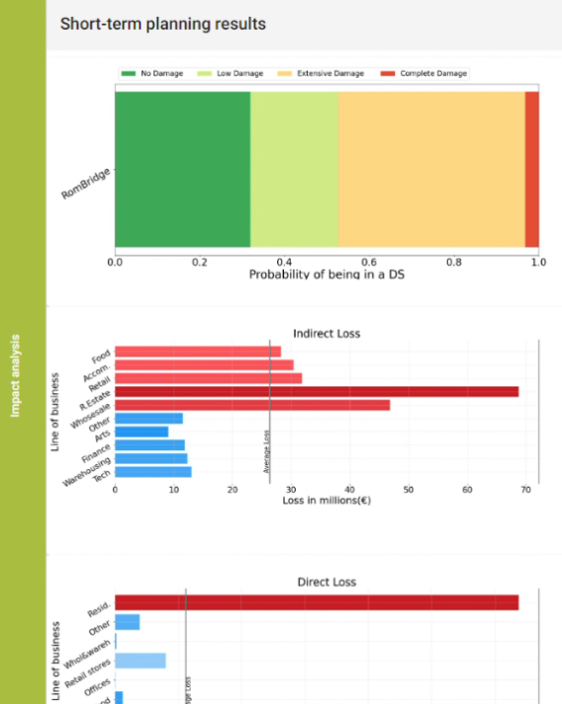
Natural disasters can severely disrupt normal business operations, with the impact often lasting long after the event if reconstruction is necessary. The resulting monetary losses include the costs of repairing or replacing damaged assets, along with lost revenue and productivity during periods of downtime. At RUBIQ, we deliver comprehensive loss assessments to help stakeholders understand the full extent of these financial impacts and provide guidance for developing effective emergency response plans. Our approach delivers tailor-made solutions that capture the salient operational characteristics of the system under consideration—simulating critical processes, exposing system vulnerabilities, and integrating case-specific hazard and exposure models. These insights inform both recovery strategies and long-term preparedness efforts, enhancing overall resilience in the face of future disruptions.
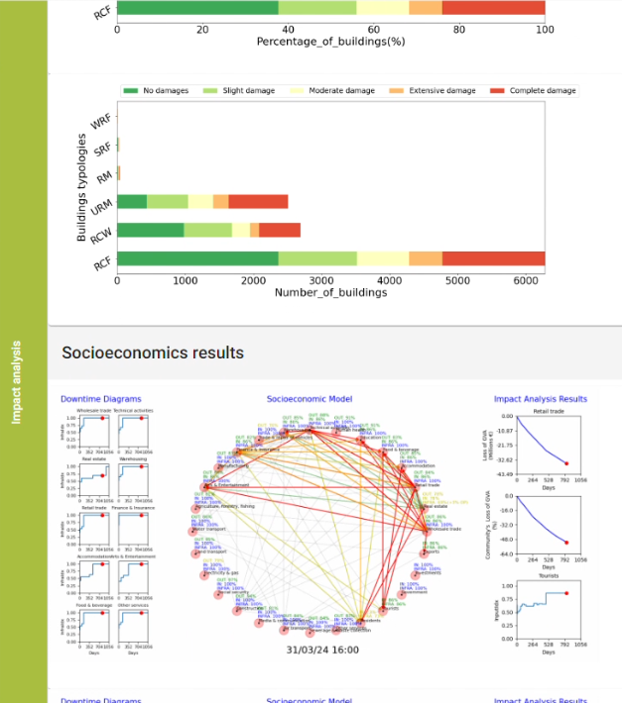
Disasters can disrupt not only physical infrastructure but also the social and economic fabric that defines a community. The impact often extends well beyond the initial damage, challenging recovery efforts and exposing system vulnerabilities. At RUBIQ, we employ our in-house Mesoeconomic Engine to simulate how residents, visitors, local businesses, and governance structures respond and recover after an adverse event. Our approach quantifies both direct losses—such as damaged assets—and indirect losses stemming from interrupted supply chains and reduced consumer demand. By integrating real-world data, seasonal factors, and behavioral responses, we deliver valuable insights that support resilience planning, continuity strategies, and long-term adaptation in the face of climate-related risks.